Stock Prop Firms vs Forex Prop Firms: Which One Fits Your Trading Style
The prop trading industry has grown from a niche corner of finance into a mainstream path for funded traders worldwide. In January 2020, the term “prop firm” generated approximately 880 monthly global searches. By the second quarter of 2025, that figure had reached 49,500, a 56-fold increase in five years. With that growth has come a far more complex landscape: stock prop firms and forex prop firms operate under very different rules, market structures, and trading rhythms. Picking the wrong one for your style can mean paying evaluation fees repeatedly with nothing to show for it.
This guide breaks down the real differences between the two models, market hours, instruments, drawdown mechanics, and regulatory context, so you can match the right type of prop firm to how you actually trade. It also covers why many traders now avoid choosing at all, opting instead for a multi-asset firm that covers both markets from a single account.

Key Takeaways
- Forex prop firms offer 24/5 access with deep liquidity: According to the 2025 BIS Triennial Survey, daily global forex turnover reached $9.6 trillion in April 2025, make sure your strategy is designed for a market that never truly sleeps, or you will over-trade outside of peak sessions.
- Stock prop firms run on strict exchange hours: Most stock exchanges have defined trading hours aligning with regular business hours in their respective time zones. The New York Stock Exchange (NYSE) operates from 9:30 AM to 4:00 PM Eastern Time. If you are based outside North America, account for the time zone before committing to a stock prop challenge.
- The PDT rule is now gone for US retail traders: The SEC on April 14, 2026 approved FINRA’s proposal to eliminate the $25,000 minimum equity requirement for pattern day traders, removing one of the most persistent barriers to retail market participation. This changes the access calculus for US-based stock traders specifically.
- Multi-asset firms eliminate the either/or decision: A multi-asset firm offering forex, stocks, indices, commodities, and cryptocurrencies from a single account is a rarity in the prop firm world, and for traders whose setups span multiple markets, it removes a genuine structural disadvantage.
Quick-Start Prioritization Framework
| Strategy | Best For | Effort Level | Time to Results |
|---|---|---|---|
| Forex prop firm (pure) | Swing and session traders in any time zone | Low-Medium | 2-6 weeks (challenge) |
| Stock prop firm (CFD/equity) | US-session intraday traders, momentum traders | Medium | 3-8 weeks (challenge) |
| Multi-asset prop firm | Traders who use correlated markets or macro setups | Low-Medium | 2-6 weeks (challenge) |
| Futures prop firm | Structured-hours traders, index and commodity futures | Medium-High | 3-8 weeks (challenge) |
Start here if you are:
- A part-time trader outside the US: Forex or multi-asset prop, the 24/5 market fits around a day job in any time zone.
- A US-based intraday trader: A stock or multi-asset prop firm captures the volatility window around the NYSE open (9:30 AM ET).
- Unsure which market suits you: Multi-asset prop, such as OneStopProp, lets you run setups in both forex and stocks without paying two separate challenge fees.
How Stock Prop Firms and Forex Prop Firms Actually Work
Before comparing the two, it helps to understand the shared foundation. Proprietary trading is a financial model where a firm uses its own capital to trade equities, forex, commodities, or derivatives for direct market profit, rather than earning commissions from client trades. In the retail funded trader model, that means you pay an evaluation fee, prove your skills inside a simulated account, and earn access to a funded account with a profit split if you pass.
The evaluation process works like this: pay a fee, trade in a simulated account, and meet profit targets under strict rules. After passing, you trade live with firm capital and share profits, for example, an 80/20 split. Firms enforce limits like maximum losses and position sizes to protect capital. Both stock and forex prop firms use this evaluation structure. The differences live in the rules built around each market’s specific characteristics.
Profit Splits and Evaluation Fees
A prop firm funds the trader with its own capital, meaning the trader does not risk their own money, while a forex broker allows trading with personal capital. With a prop firm, profits are shared, typically 70 to 90% going to the trader. Forex prop firms dominate the retail sector in terms of volume and competition, which has pushed profit splits higher. Futures prop firm profit splits range from 80% to 100%, with some firms offering 100% on initial profits.
Pro Tip: The headline profit split percentage is rarely what you actually pocket. Check whether the firm uses a trailing or static drawdown, whether there is a consistency rule limiting your single-day gains, and when payouts are processed. A 90% split with a 30% consistency cap is worth less than an 80% split with no consistency rule.
The Core Differences Between Stock and Forex Prop Firms
Market Hours and Session Dynamics
This is the most practical difference for most traders. The forex prop firm model dominates the retail sector because forex markets operate 24 hours a day, five days a week, with no Pattern Day Trader rule. Forex traders can follow the London open, the New York session, or the Asia overlap, wherever their strategy finds volatility.
Stock prop firms are anchored to exchange hours. Most stock exchanges have defined trading hours aligning with regular business hours in their respective time zones. The NYSE operates from 9:30 AM to 4:00 PM Eastern Time, while the London Stock Exchange runs from 8:00 AM to 4:30 PM GMT. If you live in Southeast Asia and want to trade US stocks, you are working through the night. In my experience, traders who ignore this time zone mismatch burn out within their first funded month.
Trading US equity futures during London hours means navigating thin order books, wider effective spreads, and stop-runs that do not resolve cleanly. If you are based in Europe or Asia and want US100 setups, a forex/CFD prop offering that instrument as a CFD gives you better liquidity conditions during your local session than a futures prop account would.
Instruments and What You Are Actually Trading
The distinction between what you can trade at a stock prop firm versus a forex prop firm is often misunderstood. The retail prop challenge industry does not give you direct ownership of equities. What firms do offer is exposure to stock price movements through CFDs (contracts for difference), index futures, or equity-linked instruments, depending on the firm and platform.
Forex prop firms focus primarily on currency pairs but most now offer metals (XAUUSD), indices, and commodities. Forex and CFD prop is where the retail prop industry started, and for good reason. A 24/5 market, instruments from XAUUSD to US100 to exotic currency pairs, and evaluation fees low enough that a trader outside the US can start without significant capital. The infrastructure is mature, the challenge formats are well-documented, and the instrument selection is genuinely broad.
Drawdown Rules and How They Are Structured
Futures prop firms typically express drawdown limits and profit targets in dollar amounts tied to contract margins, while forex prop firms use percentage-based thresholds relative to account balance. Futures evaluations often use trailing drawdown (which rises with your equity peak), whereas many forex evaluations use a static maximum drawdown from the starting balance.
For stock CFD traders inside a forex-style prop firm, the rules typically mirror the forex framework: percentage-based maximum drawdown, daily loss limits, and position sizing expressed as a fraction of account equity. Some stock programs prohibit trading in the first five minutes after market open or the last five minutes before market close, a rule that does not exist in forex, where there is no single market open event. If you scalp around the NYSE open, check this rule before you buy a challenge.
Pros of Forex Prop Firms:
- Continuous 24/5 trading window with no session gaps
- Highly liquid major pairs with tight spreads
- Mature evaluation formats and wide platform support
- Accessible to traders in any time zone
- Flexible strategies including scalping, swing, and algorithmic trading
Cons of Forex Prop Firms:
- OTC market structure means pricing runs through the firm’s internal liquidity desk
- CFD pricing runs through the firm’s internal liquidity desk, which means spreads can widen on news events at exactly the moment your position needs a clean fill.
- Fewer individual equity opportunities for stock-specific thesis traders
- Weekend gaps on instruments held overnight are a real risk
Pros of Stock Prop Firms:
- Direct exposure to individual company earnings, sector rotation, and momentum plays
- Structured market hours create defined session rhythm
- CFD equities are contracts for difference based on individual stocks, enabling traders to go long or short with leverage, offering flexibility and access to global stock markets with smaller capital requirements.
- Strong alignment with US economic data and earnings calendar
Cons of Stock Prop Firms:
- Limited to exchange hours, creating time zone constraints for non-US traders
- Fewer firms specialize in individual stock CFDs versus index-based instruments
- Lower instrument count compared to multi-asset forex platforms
- After-hours gaps on individual stocks can trigger unexpected drawdown
Regulation, Risk, and What the PDT Rule Change Means
One of the defining features of the stock trading landscape shifted in 2026. The SEC on April 14, 2026 approved FINRA’s proposal to eliminate the $25,000 minimum equity requirement for pattern day traders, removing one of the most persistent barriers to retail market participation. The decision also removed the “pattern day trader” designation, a classification that flagged any customer who executed four or more day trades within five business days.
The old rules were no longer in effect as of June 4, 2026, although brokerages have up to 18 months to implement the new ones. For retail stock traders, this removes a major reason to use a prop firm as a workaround, previously, the PDT rule was a practical driver of prop firm adoption among US equity traders who could not maintain a $25,000 account balance.
What this means in practice: US stock traders now have more flexibility in their personal brokerage accounts. The prop firm value proposition for stock traders shifts to pure capital access and the ability to trade larger positions than a personal account would allow, rather than regulatory workarounds. Therefore, if your main draw to a stock prop firm was bypassing PDT restrictions, reassess whether a prop firm still fits your goals, or whether a personal account now serves you better.
Pro Tip: Even with the PDT rule gone, prop firms still offer a capital access advantage that personal accounts cannot match. A $100K funded account through a prop firm, with a 90% profit split, gives you leverage over your personal bankroll that most retail accounts cannot replicate without significant personal risk.
On the forex side, prop firms in the US operate within a regulated environment, overseen by the CFTC (Commodity Futures Trading Commission) and the NFA (National Futures Association). However, there is no central exchange setting the price in CFD forex trading; you are trading against a model, not a market. Regulatory oversight of CFD prop structures varies significantly by jurisdiction, and some operators sit in lightly regulated environments where client protections are thin. Always verify regulatory status before purchasing any evaluation.
OneStopProp: Editor’s Pick for Traders Who Want Both Markets
Best Overall | Best for Multi-Asset Traders Who Refuse to Choose
I’ve found that the traders who struggle most with the stock-vs-forex decision are the ones who genuinely use both markets. A macro setup often starts with a forex signal, say, USD strength following CPI data, and then plays out in US equity indices. Forcing that thesis into a single-market prop account creates friction that costs real money.
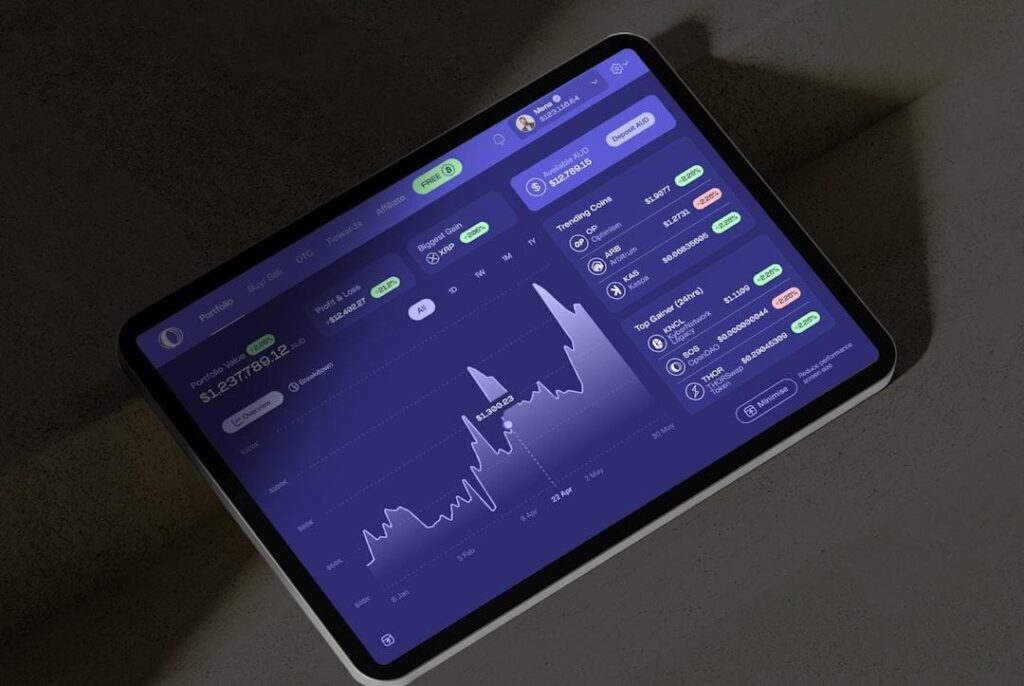
OneStopProp offers comprehensive asset selection: trade forex, stocks, indices, commodities, and cryptocurrencies all from a single account, a rarity in the prop firm world, alongside access to professional-grade platforms with TradingView integration for superior charting and analysis.
The market correlation advantage is real: traders can capitalize on relationships between markets that most prop traders cannot access due to platform limitations. This multi-asset approach gives OneStopProp traders the ability to follow opportunities wherever they appear rather than being confined to a single market.
From a structural standpoint, OneStopProp’s trader-first model offers a 90% profit split with no hidden fees or activation charges, and is built around transparent rules. With OneStopProp, you keep 90% of your profits, without rules designed to quietly work against you. That difference matters most when you are trying to get paid consistently, not just on the first withdrawal.
Pro Tip: When evaluating any prop firm, simulate your last 20 trades against the firm’s ruleset before buying the challenge. Run the numbers on daily loss limits, check whether your typical hold time violates any news or weekend holding restrictions, and confirm the payout schedule aligns with your cash flow needs.
The honest reality is that OneStopProp is the right fit for traders who already trade across markets or want the flexibility to do so. If you are a pure scalper locked into EUR/USD majors and nothing else, a dedicated forex-only firm may offer tighter spreads on that specific instrument. If you are a momentum trader focused exclusively on individual US tech stocks, a specialist stock prop firm might offer deeper coverage of single-name CFDs. Choose based on your actual strategy, not the platform’s marketing.
Common Mistakes When Choosing Between Stock and Forex Prop Firms
Choosing Based on Profit Split Headlines Alone
Any firm can advertise an 80% or 90% split. The real question is whether that split has been paid consistently, at scale, over time, and under normal business cycles. In my experience, the firms with the most aggressive headline splits often apply the most restrictive consistency rules or payout caps. Run the full calculation: headline split multiplied by realistic monthly profit, minus any consistency rule adjustments, divided by your expected payout frequency.
Ignoring the Consistency Rule
Many firms limit how much a single day’s profit can contribute to the total, for example 30 to 40% of total profits at the time of payout. This rule is devastating for traders who rely on a few big days per month, a very common pattern in both stock and forex trading. If your strategy is feast-or-famine by design, filter every prop firm by its consistency rule first.
Underestimating How Market Structure Affects Rule Compliance
Some traders fail their first evaluation, not because the targets are unrealistic, but because of rule violations: breaching the daily loss limit, oversizing positions after a losing streak, or revenge trading near the drawdown line. This applies to both stock and forex traders equally. The market type is rarely the problem. When FPFX Tech analyzed 300,000 who risk under 2% per trade are significantly more likely to pass challenges and stay funded. Set your position size to 1-2% maximum risk per trade before you enter your first evaluation trade.
Frequently Asked Questions
What is the main difference between a stock prop firm and a forex prop firm?
The core difference is the underlying market. Forex prop firms fund traders to speculate on currency pairs and often include metals, indices, and commodities through OTC CFDs in a 24/5 market. Stock prop firms focus on equity CFDs or futures tied to individual companies or indices, and are constrained by stock exchange hours. The key differences are market structure (centrally cleared versus decentralized), regulation, margin mechanics, and the instruments available to the funded trader.
Can I trade stocks at a forex prop firm?
Yes, in most cases. The best prop firm for stocks in 2026 depends on whether you want individual stock CFDs, stock index futures, or broad multi-asset exposure that includes equities alongside forex and crypto. Many forex-originated prop firms have expanded to include stock CFDs, index products, and commodities. Check the specific instrument list before buying a challenge, not every firm that advertises “multi-asset” covers individual stock CFDs.
Does the elimination of the PDT rule make stock prop firms less useful for US traders?
It changes the case for prop firms, not eliminates it. For over two decades, the PDT rule effectively prevented smaller accounts from participating in active intraday trading. Now that the barrier is gone for retail accounts, the primary reason to use a stock prop firm is pure capital access, trading $100K or more in funded capital rather than your own $5K to $10K personal account. The profit split model remains compelling for traders who want institutional-scale positions without institutional-scale personal risk.
How do drawdown rules differ between stock and forex prop challenges?
Forex prop firms typically use percentage-based drawdown thresholds calculated against your account balance or equity. Futures prop firms express drawdown limits in dollar-per-contract terms tied to exchange margins, while forex firms set limits as percentages of the notional account balance. Stock CFD programs inside forex-style firms usually mirror the percentage model. The practical implication: forex traders get a more consistent drawdown experience as their account scales, while futures traders need to recalculate dollar risk per contract each time their account size changes.
What should I look for in a multi-asset prop firm?
Four things matter most: instrument coverage (does it actually include the stocks and forex pairs you trade?), rule design (are the drawdown and consistency rules built for your trading frequency?), payout track record (has the firm paid consistently over time?), and platform quality. The key is matching your style to the market and finding a firm that supports that, with rules and tools that help you succeed, not just catch you out. OneStopProp specifically addresses all four with multi-asset access, transparent rules, a 90% profit split, and fast payouts.
Conclusion
Stock prop firms and forex prop firms both give skilled traders access to capital they would otherwise spend years accumulating. The right choice comes down to three variables: your preferred market, your time zone, and whether your strategy benefits from cross-market access. Forex prop firms win on accessibility, liquidity, and flexibility. Stock prop firms offer direct exposure to individual company movements and a structured session environment. Multi-asset firms like OneStopProp make the comparison moot for traders whose edge does not live in a single market.
Before you purchase any evaluation, simulate your last 20 trades against the firm’s exact rules. The market type matters far less than rule fit, and rule fit is what separates traders who get paid consistently from those who reset challenges month after month.
Sources
1. 2025 BIS Triennial Central Bank Survey, Bank for International Settlements. https://www.barchart.com/story/news/35263275/forex-markets-continue-to-grow-in-2025
2. Futures Prop Firm vs Forex Prop Firm: Which Is Right?, Hola Prime. https://holaprime.com/blogs/inside-hola-prime/futures-prop-firm-vs-forex-prop-firm-which-is-right/
3. Best Prop Firm for Stock Traders in 2026, Velotrade. https://velotrade.com/blog/best-prop-firm-for-stocks
4. How to Pick the Right Prop Firm for You, For Traders. https://fortraders.com/blog/pick-right-prop-firm
5. Prop Firm Trading Rules: Trading Hour Restrictions, BrightFunded. https://brightfunded.com/blog/prop-firm-trading-rules-navigating-trading-hour-restrictions
6. SEC Eliminates $25,000 Pattern Day Trader Rule, Yahoo Finance. https://finance.yahoo.com/markets/options/articles/sec-eliminates-25-000-pattern-050417843.html
7. Pattern Day Trader Rule Change, E*TRADE. https://us.etrade.com/knowledge/library/margin/pattern-day-trading-rule-change
8. Why Traders Are Moving Away from Traditional Prop Firms, OneStopProp. https://checkout.onestopprop.com/why-traders-are-moving-away-from-traditional-prop-firms-the-onestopprop-difference/
9. Best Prop Firms for Stock Traders in the US (2026 Guide), OneStopProp. https://checkout.onestopprop.com/best-prop-firms-for-stock-traders-us/
10. What Is a Prop Firm and How It Works, FundedFast. https://fundedfast.com/learn/prop-trading
11. Forex Daily Trading Volume Statistics in 2026, BestBrokers. https://www.bestbrokers.com/forex-trading/forex-daily-trading-volume/
12. Payout Rules for Futures Prop Firms, Damn Prop Firms. https://damnpropfirms.com/trading-guides/payout-rules-futures-prop-firms/
13. What Is a Prop Firm Model, The 5%ers. https://the5ers.com/what-is-a-prop-firm/
14. Best Prop Trading Firms in 2026, MarketMates. https://marketmates.com/learn/best-prop-trading-firms/